You will never have the chance to make your own work
As a result you worried that you will die feeling unfulfilled.
Jaded and bitter with the world.
Saying things like “if only I had been given more opportunities…”
But
You also know that you have a lot to offer.
Many many stories to tell.
It’s what get’s you excited.
It’s what you’ve dedicated your life to.
And before you say anything –
I know you do not want to use social media.
It is a black hole.
You never feel good coming away from it.
But I believe the chaps below have something to offer that you were not taught in drama school.
A route to freedom.
Study and learn from these guys.
I will make it easy for you and I’ll leave a checklist you can print out at the bottom. (i know how much you like checklists, future Alex)
1. Make Good Work No Matter What
“
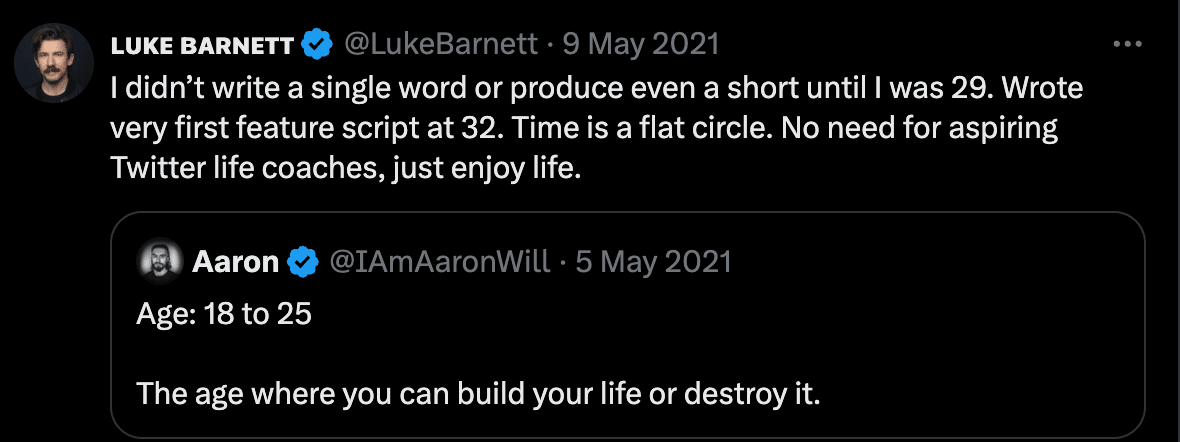
“Nobody in Hollywood trusts anyone; they just want to see that you’ve already done it successfully. Making your own content gives people who might cast you the proof they need.”
— Luke Barnett
Luke Barnett spent 15 years auditioning.
He was a late starter.
He made two features through the traditional system. Both relied on traditional distributors and platforms to find success.
They both faded away.
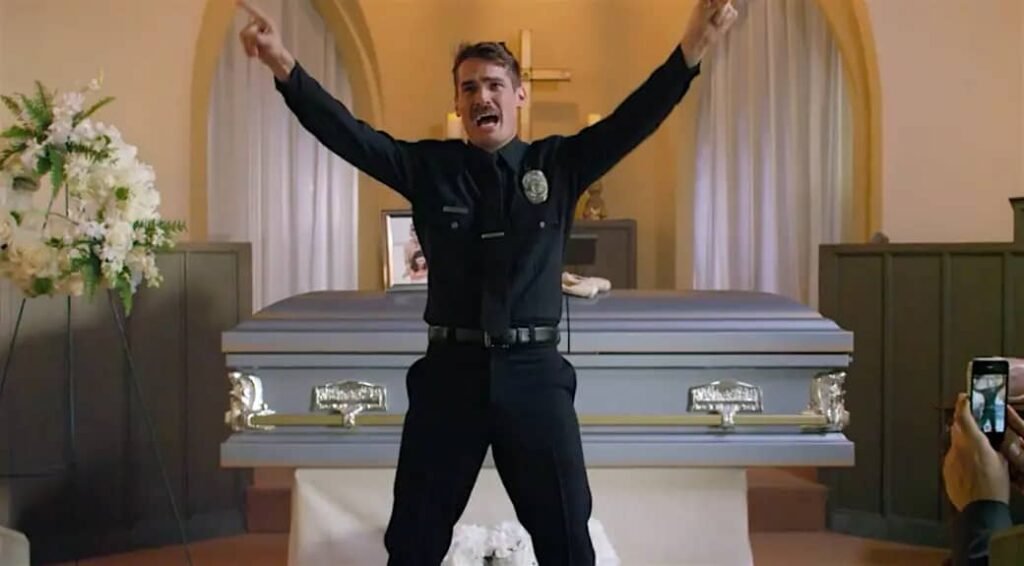
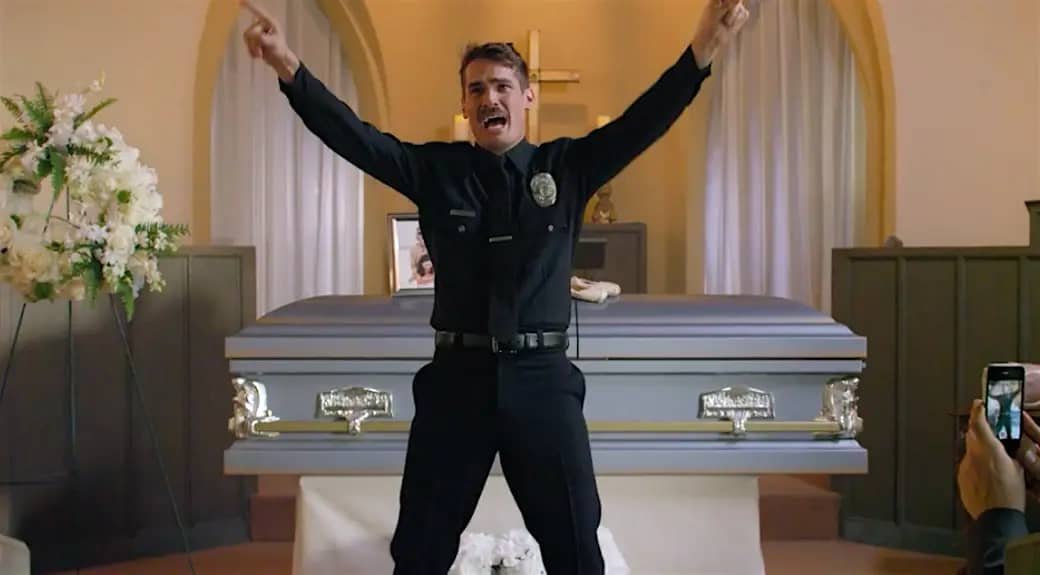
Then he made “The Crossing Over Express”
an 11 minutes long short film.
One day shoot.
Skeleton crew.
Pretty much zero budget.
Based on his mum’s death when he was 17.
It was rejected by all the major festivals.
So Luke posted it on X with the meaningful backstory of why he made it.
Despite this, the best traditional industry distribution companies could offer was $100k for it (meaning the film would lose $100k).
He turned them down and distributed it himself.
Worldwide, the film made over $1 million.
And he still owns it.
Meaning he get’s roughly 40% of all purchases.
He’s still earning from it.
“
With every new film of ours that comes out, we see spikes of revenue for our previous films.
— Jim Cummings
3. Leverage A Platform
When 6fa reader James was cast in a popular tv show he had an Instagram audience of around 3k followers.
By the time the show ended James had over 77,500 followers.
Did this just happen because of association?
No.
James was intentional.
He built a highly effective social strategy.
He brought his strange looking film camera on set, and just started shooting.
He took pictures of the leads, he took pictures behind the scenes.
He took pictures marketing department don’t take, but wish they had.
He shot everything on film. In a way no one on set was doing. His feed looked completely different to any of the casts.
If fans wanted that kind of behind-the-scenes action, they could only get it from him.
And the fans, they really wanted it.
He shot a “day in the life” video on a Super 8 and handed it to the shows social team.
Of course they used it.
And a producer who came onto the show later said it was that video that convinced her to come aboard.
He’d given the show a depth it might not have otherwise had.
He added value.
Not by making himself the centre of attention. But in fact, by doing the complete opposite.
By framing others.
By elevating the show in a new, unconventional light.
By bringing value to the shows audience.
And as a result his follower count was almost double that of any other supporting cast.
All whilst staying true to his own artistic temperament.
However.
A question remains:
Are there any actual benefits to having over 77,500 followers?
“
Objectively, it’s hard to say but it certainly gets brought up by people I work with, people see it as a mark of popularity or public awareness. It was convertible into a small core following that has joined me on platforms like twitch. That audience has been instrumental in bolstering more risky projects (like the stage show I developed for a games festival) where the audience might not have been there if I hadn’t established a small but core fan base.
— James
James harnessed the power of his audience to make things he wanted to make.
The Core
What is interesting, future Alex, is that it always comes back to the core fans.
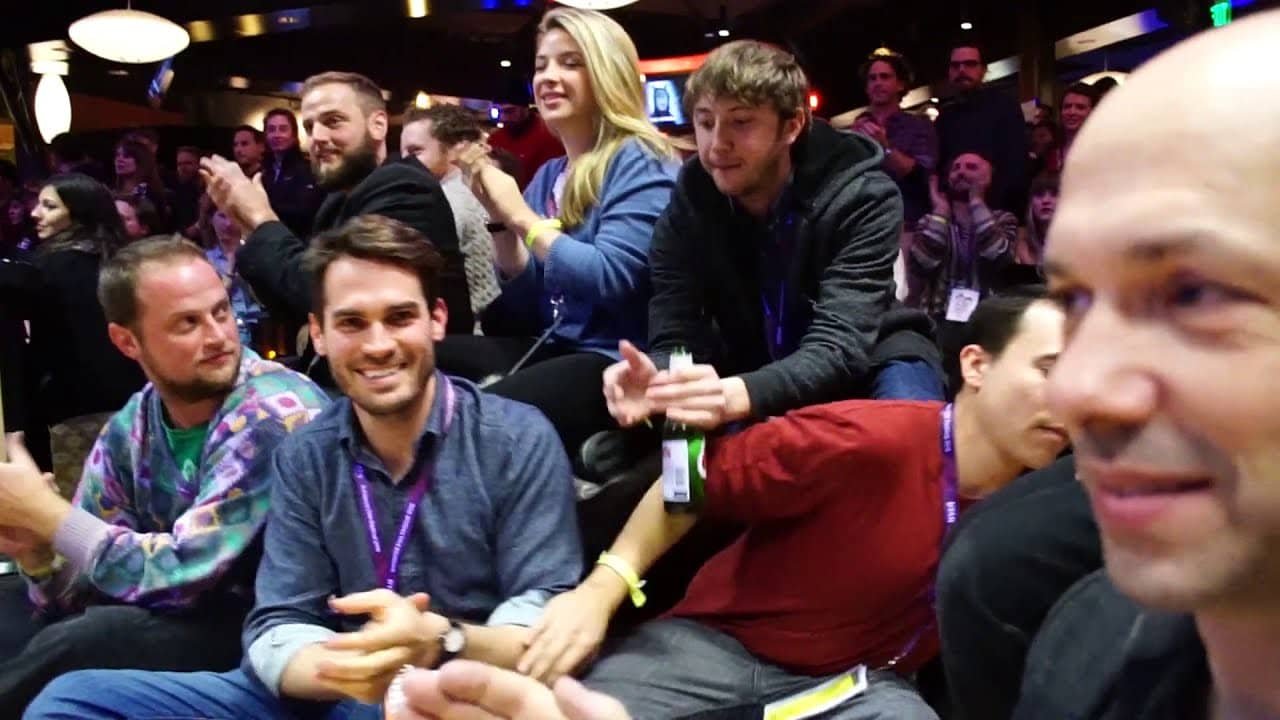
With Luke it was those who shared his short.
With Jim it was those who funded his feature.
And with James it was those who came with him over to Twitch.
A large audience found them on social, and a smaller group of superfans come on the journey with them and helped them create their work.
Social media is really just a means to an end.
The stop in the middle.
Not the goal.
Make good work.
Share it with people.
Repeat.
I made this checklist for you – it should make things easier:
I got to see reader Finn’s play that he wrote, directed and put on at the Camden Fringe. “In This Industry” was a spicy story that really got to the heart of what it’s like to be on the cusp of entering the industry. I was overjoyed to learn this week that off the back of that he got a new agent. Smashing work mate.
Had a great chat last week with reader Kat, where I learnt she’s writing a show for Edinburgh this year! From what she told me about it it sounds absolutely cracking and I can’t wait to hear more.
Awesome work everyone – keep it up!
(and a big thank you to reader POJ. Thanks mate xx)
This week’s resource: How to Write A Short Film
“
You’re writing a postcard not a book…
— John August
Here’s a 5 min clip of Craig Mazin (The Last of Us, Chernobyl) and John August (BigFish) on their Scriptnotes podcast answering a question about how to write short films.
Be sure to subscribe to Scriptnotes if you are interested in writing.
Office Hours Are Back!
If you have a project you want to talk about, you want to run through lines, do a read through, you have an idea you need a 2nd or 3rd eye on, you want help setting up audiobooks from home, curious about audience building, you need a reader for a selftape. Or you just want to chat
We want to always keep this newsletter free. If it has helped you in any way and you would like to give back – please consider leaving a testimonial below. It takes less than 2 minutes and you will have helped us out enormously. Thank you x
So, future Alex, when you feel like you are defaulting back to the default path. Remember these 3 mavericks.
When you find yourself thinking “Why aren’t being given any auditions”
When you find yourself saying “this should be my agents job” or “the pr team will handle it”
Remember passivity is death.
And no one is coming to save you.
You know you have so much to give. So prove it.
Go make the fkn thing.
A x
P.s. it’s as easy as telling someone you know that you are going to make something (thanks reader Phoebe for this reminder last week!)
P.p.p.s If you have a moment let me know how I’m doing 👇